The purpose of this page is to give some of our book’s contributors a longer platform for their submitted pieces about their classroom games. All pieces here were published in a shorter format in our book The Allure of Play and were peer-reviewed by the book’s publisher. We also begin each piece with our classification of how it is using our book’s methods and mechanics.
% ) U 8& I % ) U 8& I % ) U 8& I % ) U 8& I % ) U 8& I
Co-Design as Undergraduate Research in Psychology 203, Foundations of Game-Based Learning
Note from Joe and Tori: The following piece was originally submitted and accepted by us as an edited chapter. The editor changed the format of the book, and the text was modified slightly. Within the actual book, author credit was granted within the body of the text rather than in the table of contents, as is the tradition for edited volumes.
Audience: Psychology (Undergraduate)
Learning Outcomes: Develop and iterate research ideas using design-based prototypes. Collect data to inform prototype designs, and analyze pilot data. Disseminate research products via web portals and conference presentations.
Complex Mechanics Used: Brainstorming and Creation
Simple Mechanics Used: Rapid, Role
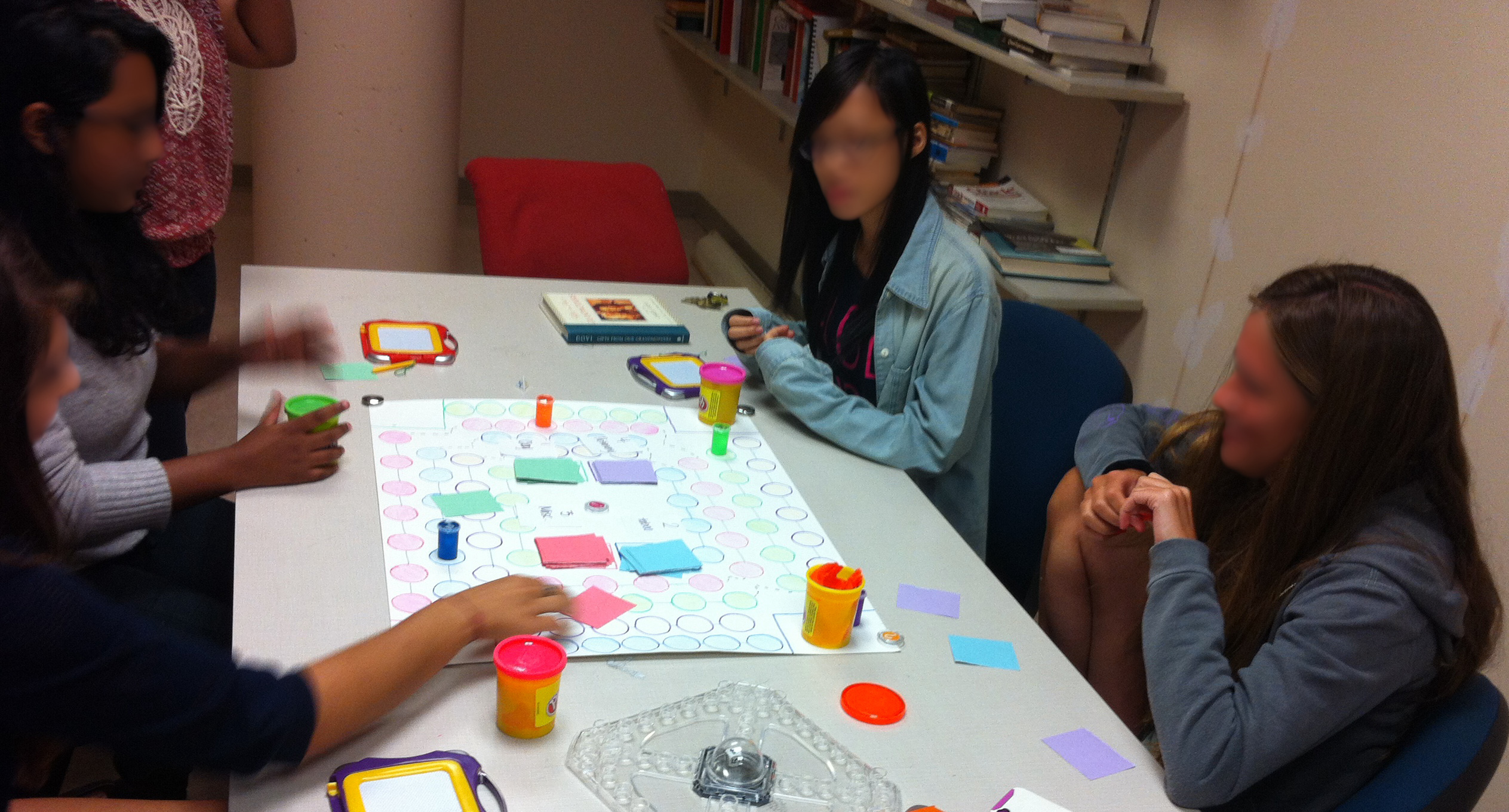
Every spring term, in my popular Foundations of Game-Based Learning course, I have 30 undergraduates designing an educational game of their own choosing to achieve social or behavioral impact (Table 1). I put the students into two roles: researcher and game designer. They identify an intervention that they find interesting—ideally one that aligns with any career goals—then, they study the impact of their game-based intervention on cognition and behavior. In this “studio” environment, students conduct research in the primary literature to determine how professional psychologists measure change in cognition or behavior for a given specialization in psychology. If and when a standardized metric exists for the outcome, the student designer will try to incorporate it into the core of the game design.
After the initial prototype is constructed, students enter into an iterative cycle inspired by design-based research. During each cycle, students iterate upon their prototype, and then playtest that iteration with their peers. Peers and the instructor offer comments, but students are mostly encouraged to make their own revisions based on data collected. As the course progresses, students develop a pre-alpha, alpha, beta, and gold master version of the game. Students update their progress on worksheets and by posting on their blog. They also play professional games during weekly game jams and critically analyze each game’s components by following template worksheets that teach definitions of game features.
Ultimately, the game design culminates in students learning additional skills of how to disseminate their learning games via a range of formats, such as a research poster, ePortfolio, presentation at their local undergraduate research conference and/or at the National Council for Undergraduate Research conference (NCUR) or Posters on the Hill. Some games are featured on the website transformativegames.org, and a few students even produce their games commercially. It is expected that the students use evidence-driven decision-making in their processes and, when they do, it’s transformational.
The most common and happy learning outcome of these labors is increased student persistence and grit to surmount the challenges of transitioning to college and becoming successful there (Duckworth, 2016). Learning is a game, even when it’s not fun by classical definitions. Watching my classroom transform into a creative space for learning and watching students triumph over struggle has been the biggest reward in my teaching career. Students have created such transformational games (digital and analogue) on many topics, such as Restaurant Rockstar, which educates peers about Nutrition Facts labels in the fight against obesity, and Panic Attackers!, which engages student-players to understand anxiety disorders and the appropriate therapies for their management and resolution.
References
Duckworth, A. (2016). Grit: The power of passion and perseverance. Scribner. Duckworth Book.
Citation for this Piece
Duncan, R.O. (2023). Codesign as Undergraduate Research. In Bisz, J. & Mondelli, V., The allure of play: The educator’s guide to active learning exercises and games. New York, NY: Teachers College Press
% ) U 8& I % ) U 8& I % ) U 8& I % ) U 8& I % ) U 8& I
Panic Attackers!
Note from Joe and Tori: The following piece was originally submitted and accepted by us as an edited chapter. The editor changed the format of the book, and the text was modified slightly. Within the actual book, author credit was granted within the body of the text rather than in the table of contents, as is the tradition for edited volumes.
Audience: Psychology, Behavioral Sciences, Health & Wellness (Undergraduate, High School)
Learning Outcomes: Students understand 8 major types of anxiety disorders and can name appropriate therapies.
Complex Mechanics Used: Concentration
Simple Mechanics Used: Rival, Random, Reward
Tabletop Game Mechanics Used: Concealing, Map or Chart
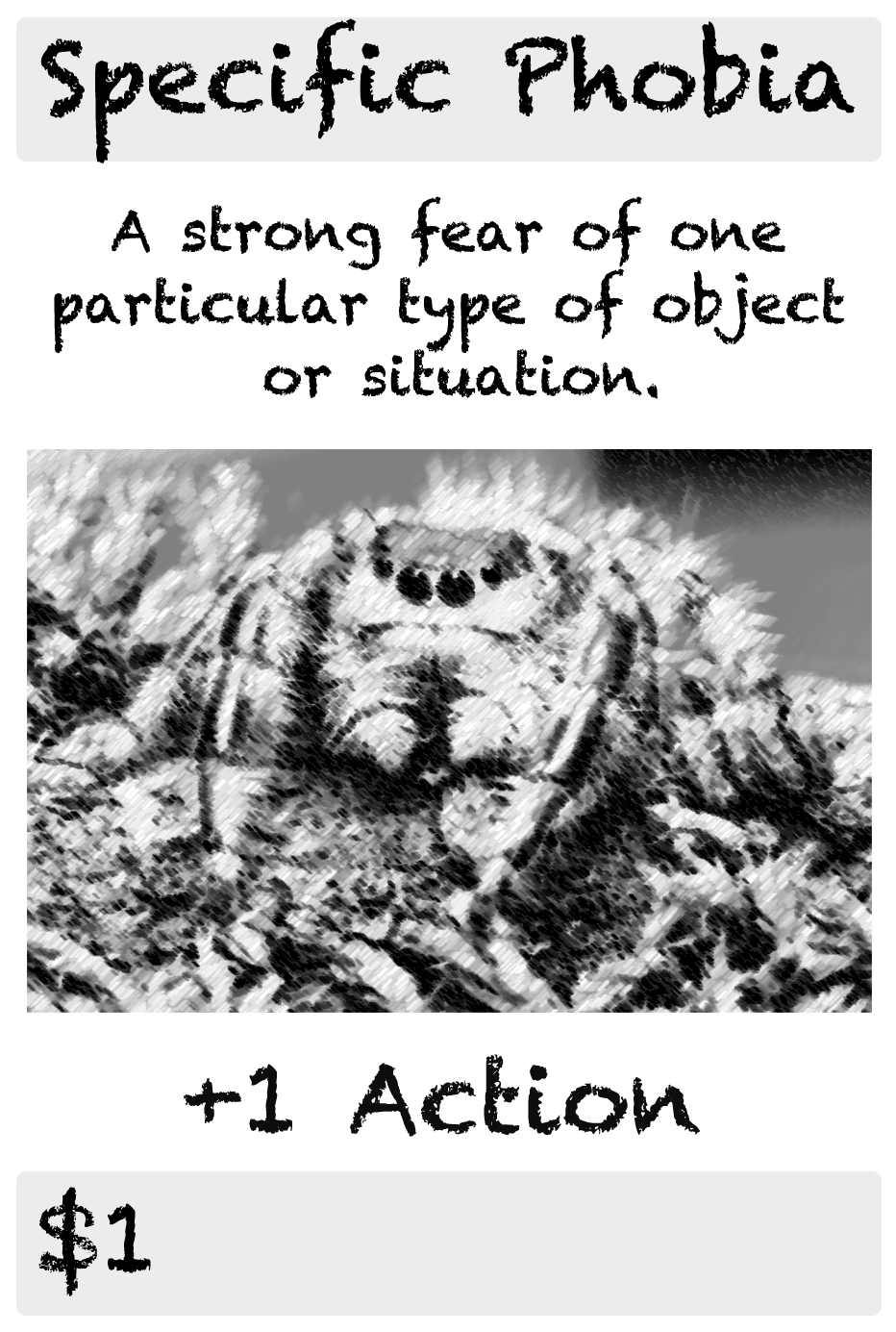
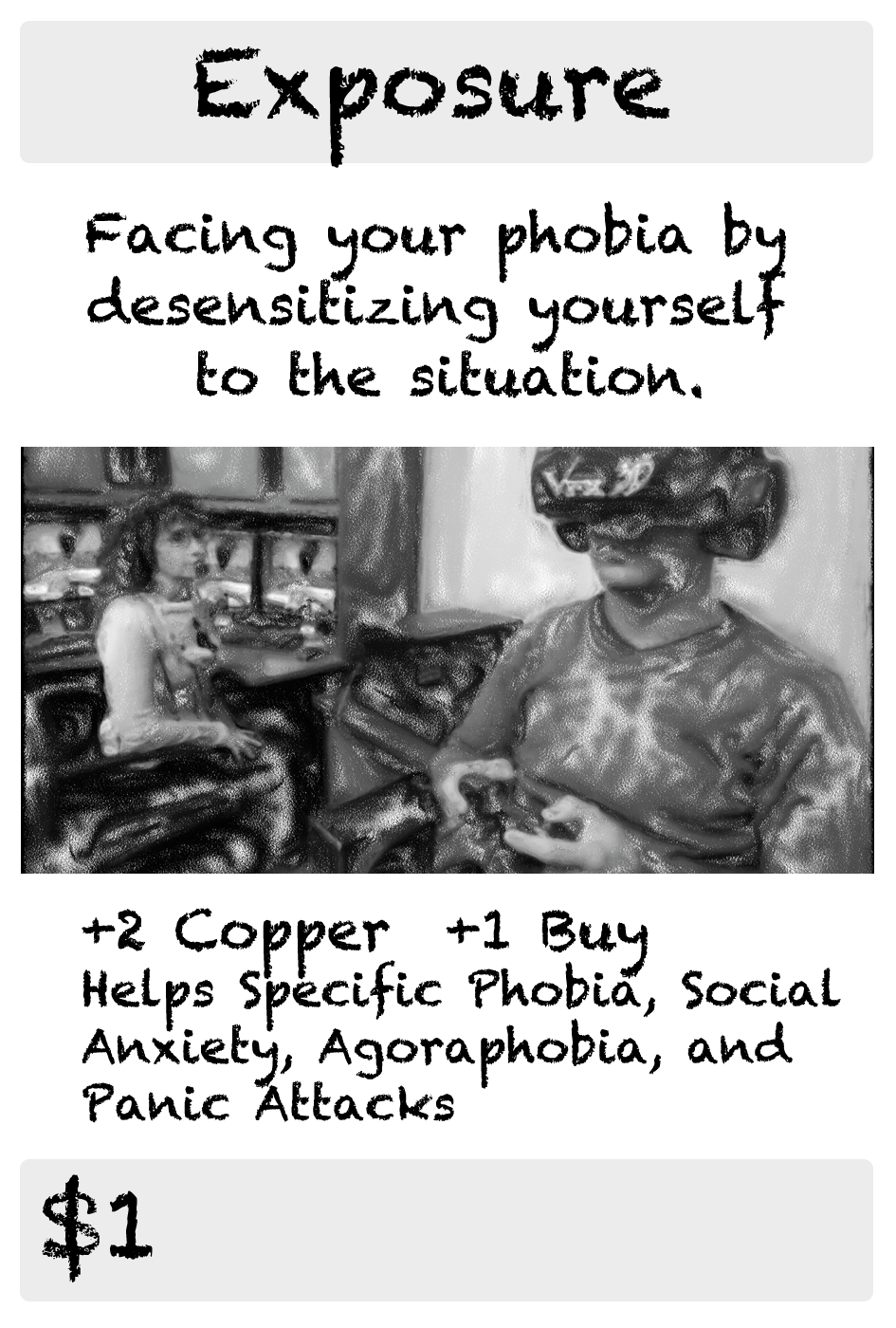
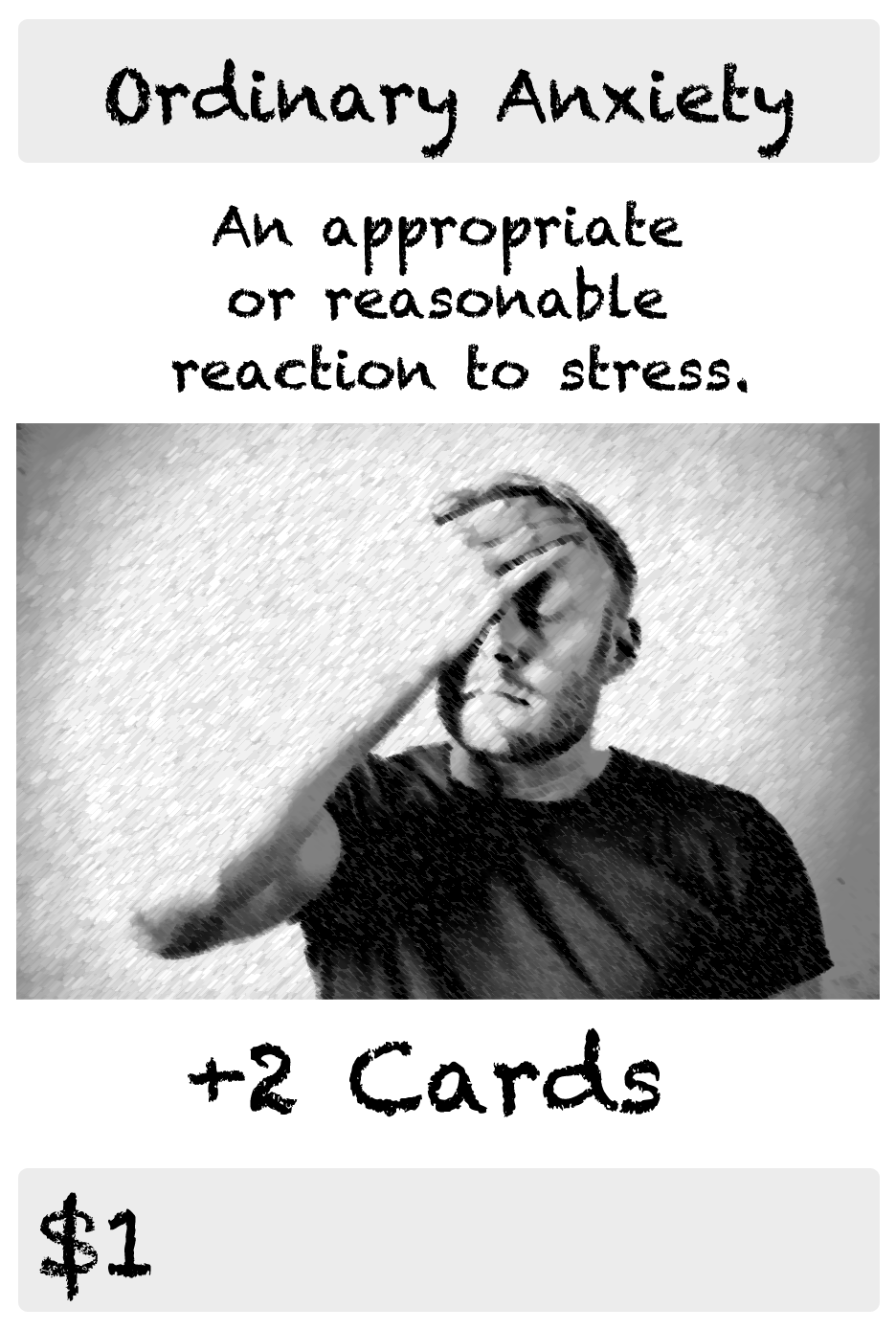
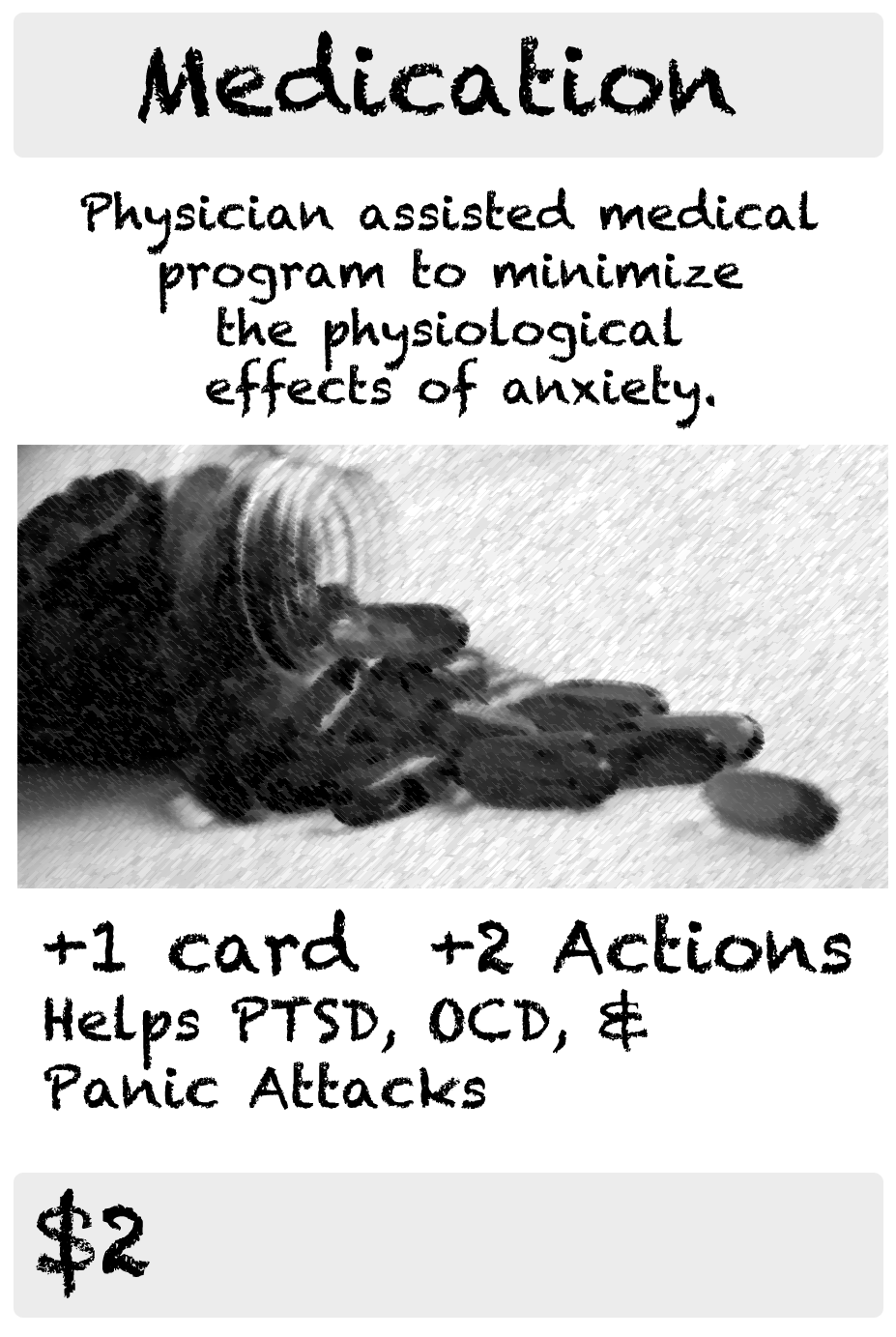
Panic Attackers! is a card game for anyone interested in learning about anxiety disorders (Table 2) (Bashir et al., 2013). Since the American Psychological Association has identified anxiety as the leading mental health issue in the United States, and college freshmen are particularly susceptible to anxiety, student researcher Bilal Bashir had two goals: to raise awareness, and to test the hypothesis that doing so through a learning game would improve content retention compared to text-based instruction. For the experimental group, Bilal modified the popular commercial strategy game, Dominion, designed by Vaccarino (2016). All rules and game mechanics were identical to Dominion, except the card content was altered to represent 8 major types of anxiety and 12 therapies modeled from the Problem Effectiveness Chart in the Anxiety and Phobia Workbook (Bourne, 2010).
In a basic round of play, a player can attack their opponent using either an Anxiety or Therapy card. The opponent can react by playing an appropriate Therapy or Anxiety card, respectively. An appropriate match constituted a winning defense, and a failure to match resulted in a winning attack. The winner of each round collected the cards and their associated points. The relationship between anxieties and therapies is not one-to-one, and these complicated relationships were expected to become more familiar to subjects via game play. To assess learning outcomes, all subjects were given a blank version of the Problem Effectiveness Chart to complete as a post-treatment assessment.
References
Bashir, B., Mokrue, K., & Duncan, R.O. (2013). Using Game-Based Learning to Educate At-Risk Students About Anxiety Disorders. Poster presented at the 2013 National Conference on Undergraduate Research, La Crosse, WI.
Bourne, E.J. (2010). The Anxiety and Phobia Workbook (5th Ed). Oakland, CA: New Harbinger Publications, Inc.
Vaccarino, D. X. (2016). Dominion (2nd ed.) [Board game]. Rio Grande Games.
Citation for this Piece
Duncan, R.O. (2023). Panic Attackers! In Bisz, J. & Mondelli, V., The allure of play: The educator’s guide to active learning exercises and games. New York, NY: Teachers College Press